In the last ten years, Indigenous and Afro-descendant peoples in Nicaragua have been forced to move to Costa Rica fleeing violence, land invasions and socio-political crisis. For indigenous and Afro-descendant peoples, forced migration means losing territory and community life, traditions, language, economic activities and traditional forms of organization.
Regarding these conditions, the United Nations High Commissioner for Human Rights (UNHCHR) concluded in its recent Annual Report on the Situation of Human Rights in Nicaragua that:
“Indigenous Peoples and Afro-descendants continue to face obstacles in exercising their rights related to their territories and self-governance. In this context, they are exposed to increased violence, illegal exploitation and usurpation of lands and resources, which seriously threatens their cultural and physical existence.”
In this context, last November 21, the indigenous movement Prilaka and the Indigenous and Afro-descendant movement Kiamka Nanih in the framework of the International Day for the Elimination of Violence against Women held the first inter-institutional information fair aimed at the Indigenous and Afro-descendant Population (PIyA) displaced in Costa Rica, which was attended by more than 300 people. The fair is part of an effort by both social movements to support dignified insertion in exile, bringing people closer to information about their rights and the different services offered by state institutions, universities and civil society organizations to promote social inclusion and dignified adaptation.
The activity was carried out in coordination with the municipalities of Desamparados, Goicoechea, San José and Alajuelita, where the largest number of indigenous and Afro-descendant people from Nicaragua are registered. More than 20 institutions participated with information and case management stands. This effort shows how populations in situations of forced displacement are organizing to defend and promote their rights beyond borders.
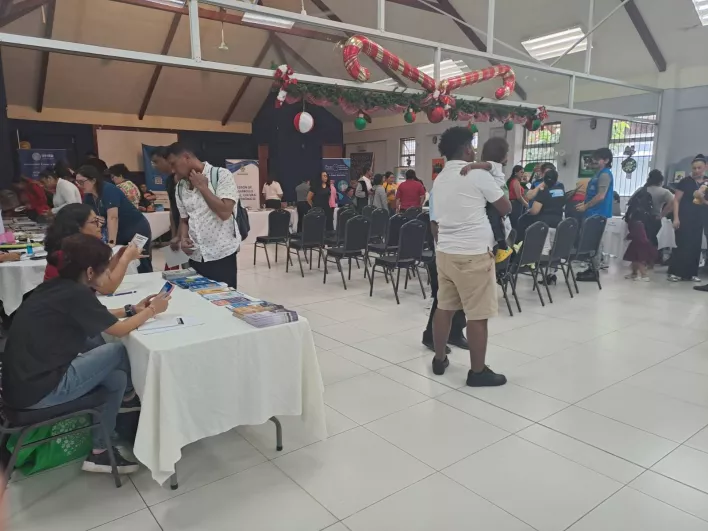
PBI Nicaragua was present observing the Fair and was able to confirm the immense need for information and attention in basic services that this population has. In particular, we highlight that the Fair guaranteed interpretation into Miskitu, which allowed real access to information, since language is one of the barriers that indigenous people face when they need access to rights in Costa Rica. Likewise, the high need to obtain an appointment to request refuge, the first step to qualify for international protection offered by the Costa Rican State, became evident. The Refugee Unit of the General Directorate of Migration and Aliens was present at the fair and attended to more than 200 people who were finally able to obtain an appointment to which they had not previously had access.
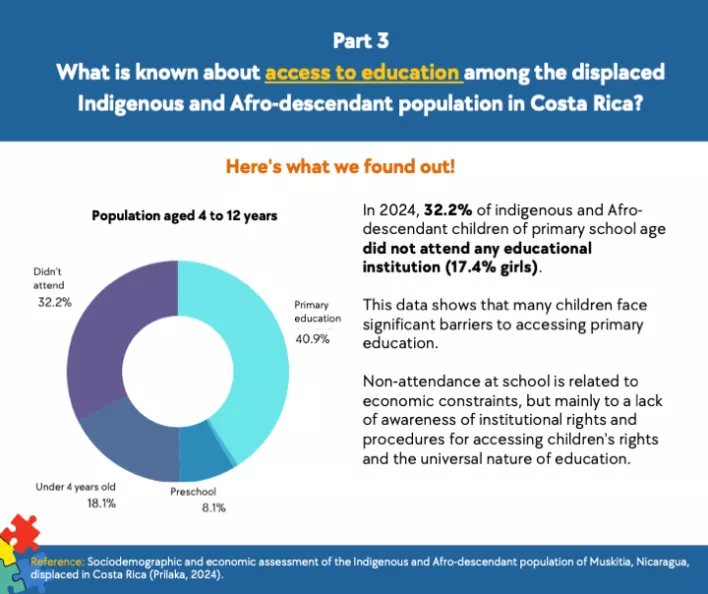
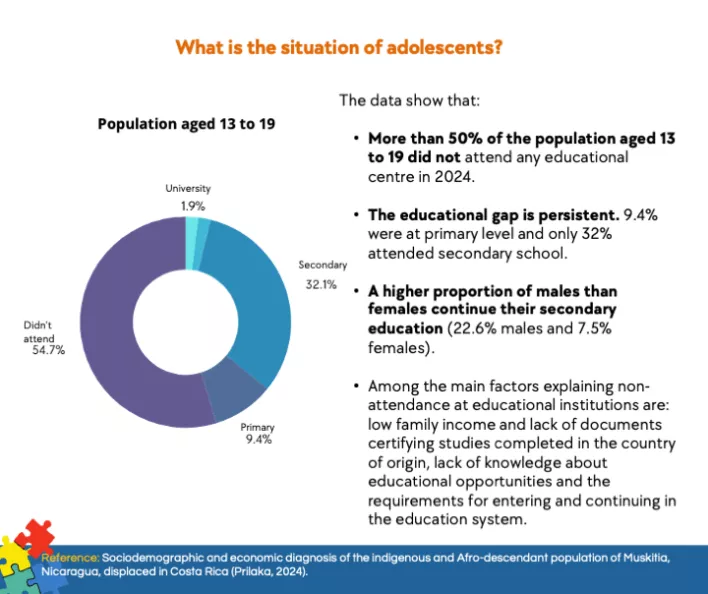
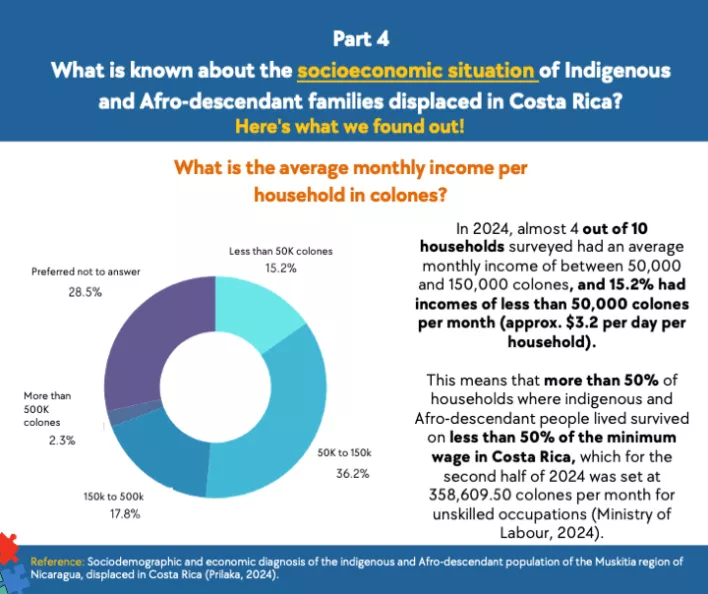
The fair was based on the findings of the Socio-demographic and Economic Diagnosis of the Indigenous and Afro-descendant Population of the Muskita of Nicaragua displaced in Costa Rica, prepared by Prilaka in 2024. The document evidences the increase in migration in the last ten years and the barriers faced by the populations to access basic services, showing that the indigenous and Afro-descendant population, when migrating, continues to encounter conditions of exclusion, violence, discrimination and impoverishment.
In the following infographics, which are part of the campaign Did You Know What? published by Prilaka on its social networks, present the main findings of the diagnosis in terms of access to rights such as education, employment and living wage.
At PBI, we recognise the work of Indigenous and Afro-descendant human rights defenders, for whom continuing their work from exile is even more complex and difficult than it is for refugees as a whole. Facing barriers such as discrimination, racism, and language, they must make a double effort to achieve a community organisation that fights for a dignified insertion in the host country, while continuing to promote resistance to all kinds of violence, colonising and extractivist policies and practices on both sides of the border.